A custom mechanical keyboard project starts with the foundation: the barebone chassis and printed circuit board (PCB). Modern DIY barebone keyboard kits shift away from factory-soldered boards, allowing builders to install, swap, and replace switches without soldering. These modular kits integrate hot-swap sockets, multi-layer case dampening, and configurable controller chips that accommodate various mechanical switch types and keycaps.
Choosing the proper barebone kit requires evaluating form factors, mounting mechanics, connectivity protocols, and keycap compatibility. By examining options spanning compact 65% boards, split ergonomic units, tenkeyless workstations, and full-size layouts, builders can assemble a typing tool tailored to their desk workflow.
Technical Evaluation Pillars
- Mounting ArchitectureReviewing listed plate mounting designs, such as decoupled gasket structures versus rigid tray mounts, to evaluate listed dampening characteristics.
- Socket CompatibilityVerifying hot-swappable socket support for standard 3-pin and 5-pin MX-style mechanical switches across various switch types.
- Firmware ProtocolsDocumenting the availability of open-source configuration environments, including VIA and QMK support, against proprietary closed utilities.
- Connectivity and FeaturesConfirming listed connection options—Bluetooth, 2.4GHz wireless, and wired Type-C—as well as auxiliary hardware like display screens, knobs, and RGB backlighting.
Verified Barebone Kits and Accessories

GMK67 65% Gasket Bluetooth 2.4G Wireless Hot-swappable Customized Mechanical …

ZUOYA GMK70 VIA/Qmk separate Gaming Mechanical Keyboard kit Wired Wireless B…
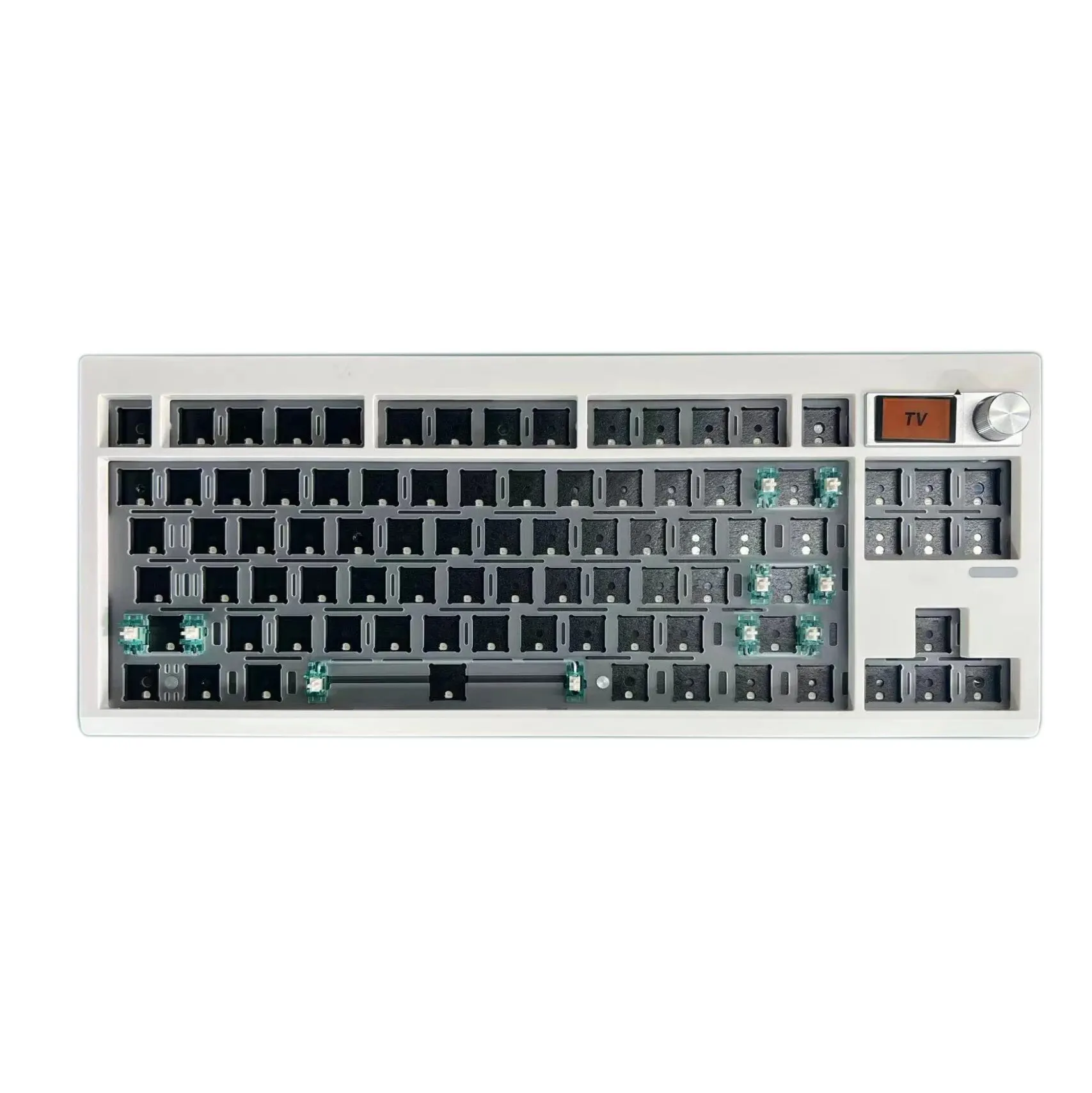
GMK87 Mechanical Keyboard KIT With Display Screen RGB Backlit Gasket Structur…

GMK104 Mechanical Keyboard Kit Three Mode Gaming Keyboard Hot Swap Backlit G…
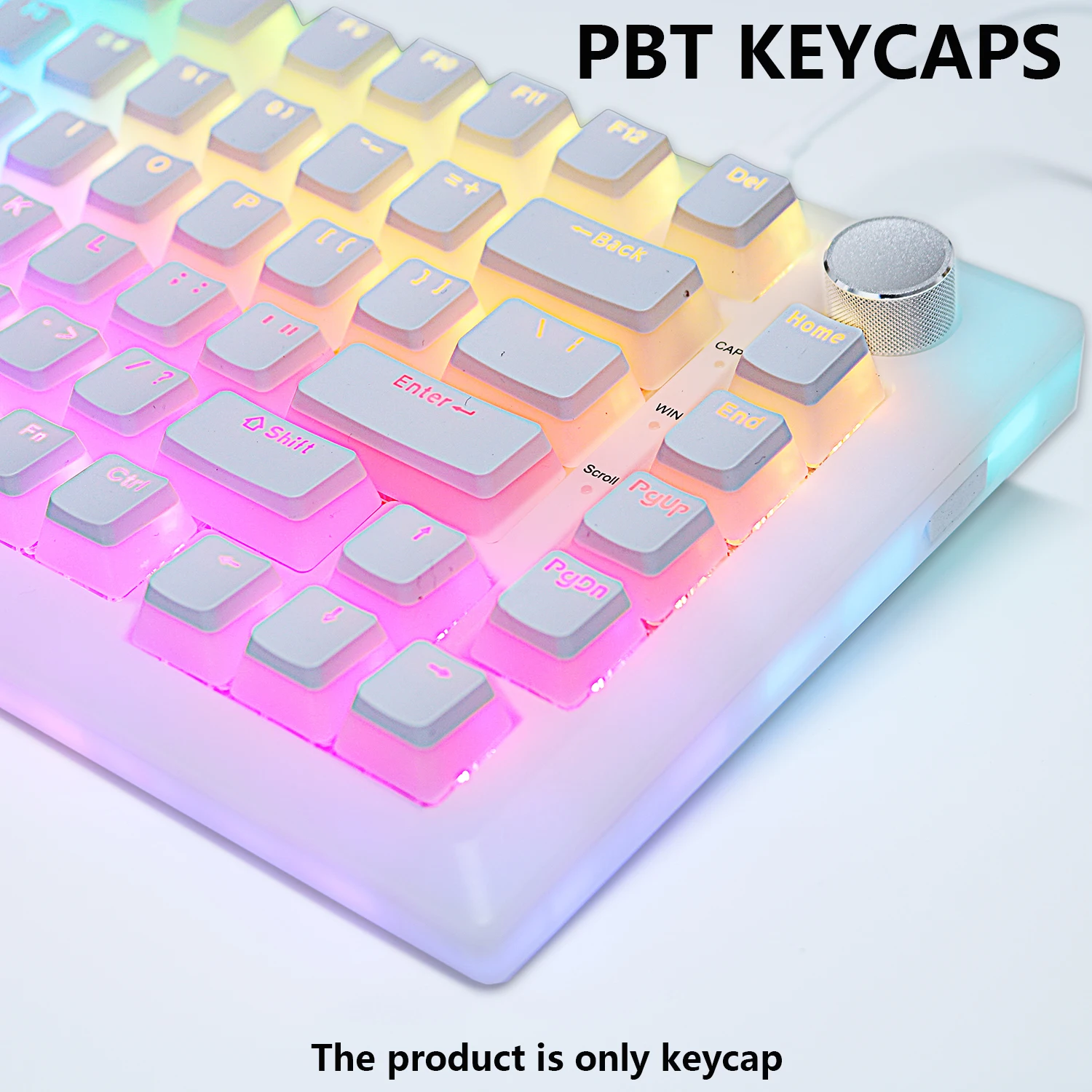
PBT Pudding Keycaps 129 keys Keycap OEM Profile Key cap For Mechanical Keyboa…
Target User Profiles
Selecting a barebone kit depends on desk space, ergonomic needs, and daily typing habits. Here is how the verified kits align with specific users:
- Minimalists and Commuters: The GMK67 is tailored for typists who prioritize desk space and portability with its 65% footprint and wireless tri-mode connectivity.
- Ergonomics-Focused Typists: The ZUOYA GMK70 suits individuals seeking relief from wrist pronation with split chassis placement and VIA/QMK support.
- Balanced Productivity Users: The GMK87 fits users who require dedicated function rows, navigation clusters, an integrated display screen, and VIA customization.
- Accountants and Data Specialists: The GMK104 serves professionals who depend on a dedicated numeric keypad for data entry within a gasket-mounted assembly.
- Aesthetic and RGB Customizers: The PBT Pudding Keycaps 129-Key Set suits builders seeking vibrant per-key lighting across 65%, TKL, and 104-key layouts.
Form Factor Analysis and Verified Kits
The GMK67 65% Gasket Bluetooth 2.4G Wireless Hot-swappable Customized Mechanical Keyboard Kit is listed at $36.76 with a 98% rating score across 783 marketplace reviews. It delivers a 65% layout retaining discrete arrow keys alongside vertical navigation switches, tri-mode wireless operation, per-key RGB backlighting, a rotary volume knob, and gasket dampening.
For ergonomic customization, the ZUOYA GMK70 VIA/QMK Separate Gaming Mechanical Keyboard Kit carries a reference price of $57.63 with a 98% rating score across 831 reviews. It features an exploded two-piece split casing connected via an interconnecting cable, tri-mode connectivity, gasket mounting, and native support for open-source VIA and QMK firmware.
The GMK87 Mechanical Keyboard Kit With Display Screen is priced at $52.84 with a 98% rating score across 551 reviews. This kit adopts an 87-key Tenkeyless footprint, an integrated LCD display screen for status metrics, dynamic RGB backlighting, gasket suspension, and VIA custom firmware integration.
The GMK104 Mechanical Keyboard Kit is listed at $62.51 with a 98% rating score from 560 reviews, delivering a full 104-key profile with an integrated display screen, hot-swappable PCB, RGB backlighting, gasket mounting, and VIA support for numerical workflows.
To complete an unpopulated setup, the PBT Pudding Keycaps 129-Key Set is listed at $9.97 with a 93.6% rating score over 352 reviews. Constructed from PBT plastic with dual-layer pudding walls, it provides 129 keys covering compact 65%, 87-key TKL, and 104-key keyboards.
Hardware Specification Comparison
| Product | Layout Profile | Mounting Type | Firmware Protocol | Connectivity | Special Hardware |
|---|---|---|---|---|---|
| GMK67 65% Gasket Bluetooth 2.4G Wireless Hot-swappable Customized Mechanical Keyboard Kit RGB Backlit | 65% Compact | Gasket Structure | Standard Utility | Bluetooth, 2.4G, Type-C | Rotary Knob, RGB Backlit |
| ZUOYA GMK70 VIA/Qmk separate Gaming Mechanical Keyboard kit Wired Wireless Bluetooth Hot Swappable Gasket Customized Split | Split Ergonomic | Gasket Structure | VIA / QMK | Wired, Wireless Bluetooth | Two-piece Split Housing |
| GMK87 Mechanical Keyboard KIT With Display Screen RGB Backlit Gasket Structure Gaming Hot Swap Keyboard for VIA Customized | 87-Key Tenkeyless | Gasket Structure | VIA Customized | Tri-Mode Wireless / Wired | LCD Display Screen, RGB |
| GMK104 Mechanical Keyboard Kit Three Mode Gaming Keyboard Hot Swap Backlit Gasket Structure This VIA with display screen | 104-Key Full Size | Gasket Structure | VIA Compatible | Three Mode Wireless / Wired | LCD Display Screen, RGB |
| PBT Pudding Keycaps 129 keys Keycap OEM Profile Key cap For Mechanical Keyboard kit Mx Switch RGB backlit 87 104 Gamer Keyboards | 129-Key Set (65/87/104) | N/A (OEM Profile) | N/A | MX Stem Mount | Translucent Pudding Walls |
Barebone Selection Matrix
| Product | Desk Footprint & Portability | Ergonomic Flexibility | Open-Source Programmability | Dedicated Numeric Input |
|---|---|---|---|---|
| GMK67 65% Gasket Bluetooth 2.4G Wireless Hot-swappable Customized Mechanical Keyboard Kit RGB Backlit | 9.5 | 6.5 | 6 | 2 |
| ZUOYA GMK70 VIA/Qmk separate Gaming Mechanical Keyboard kit Wired Wireless Bluetooth Hot Swappable Gasket Customized Split | 7 | 10 | 9.5 | 2 |
| GMK87 Mechanical Keyboard KIT With Display Screen RGB Backlit Gasket Structure Gaming Hot Swap Keyboard for VIA Customized | 6.5 | 7 | 8.5 | 3 |
| GMK104 Mechanical Keyboard Kit Three Mode Gaming Keyboard Hot Swap Backlit Gasket Structure This VIA with display screen | 4 | 6 | 8.5 | 10 |
Technical Sourcing and Validation Ledger
Known facts
Product data, prices, and user rating percentages are compiled directly from marketplace listing sheets.
Hot-swap capability across all reviewed barebone PCBs accommodates standard 3-pin and 5-pin MX mechanical switches.
Open-source VIA and QMK protocol support is documented for the GMK70, GMK87, and GMK104 kits.
Analysis
Gasket mounting structures across all four barebone listings decouple the PCB/plate assembly to mitigate high-frequency acoustic reverberation.
The 129-key count of the pudding keycap set accounts for non-standard 1.75u right-Shift keys common to 65% layouts.
Uncertainties
Exact battery milliamp-hour ratings and specific factory dampener foam compositions are not uniformly stated across listings.
Trade-offs and Assembly Considerations
- Barebone kits do not include mechanical switches or keycaps. Builders must calculate the total project cost, including 70 to 110 switches and compatible keycaps, before committing to a bare chassis.
- Kits equipped with integrated LCD screens, RGB backlighting, and multi-mode wireless chips experience accelerated battery consumption in wireless mode when operating continuously at full illumination.
- The split layout of the ZUOYA GMK70 demands an adaptation period, as typists must position hands independently without crossing over the board center, while managing an interconnecting cable on the desk.
- Full-size boards like the GMK104 occupy substantial desk area, pushing mouse placement further away, which can impact posture during long computing sessions.
- Budget barebones often include pre-installed plate-mount stabilizers that may display minor wire ticking or uneven factory lubrication, requiring manual tuning by the builder to achieve smooth key return.